From Course to Credential: What We’re Learning About Go-to-Market Strategy
The work didn’t change. The positioning did.
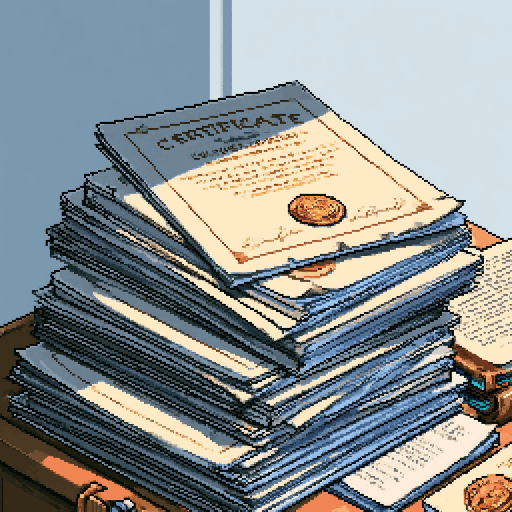
A few weeks ago, I was speaking with someone who has taught hundreds of people how to build online courses. And she said something that’s stuck with me:
“They keep coming back, asking what to do next. I don’t know what to tell them.”
For many of her clients, the initial success is there. They’ve built a course, delivered it to a few cohorts, and maybe even made it profitable.
But eventually, the question shows up:
What now?
The next step isn’t always obvious
Some try to launch another course. Others explore books, cohorts, or masterminds.
But what this educator kept hearing (and feeling herself) was a desire to solidify what they’d built:
→ To give their method a little more structure.
→ A little more recognition.
→ A little more staying power.
And for a long time, she had the same instinct I did:
“Maybe what they need isn't something new, but a clear next step.”
Building the product before the pitch
At some point, I realized I wasn’t just helping her shape what came next - I was relearning something about my own work.
It reminded me of something I’d forgotten:
It’s easy to get stuck polishing the idea in your own head.
Harder, but more valuable, to refine it in dialogue with your customers.
That’s what’s been happening. And that’s what started to reshape how I think about our own go-to-market.
Rethinking the GTM stack
Historically, we’d lead with services: brand, website, content, campaigns. But the more we talked to people interested in exploring a "next step" in their business, the more we realized:
They weren’t asking for a website.
They were asking for direction:
→ “How do I structure this?”
→ “How does this fit into what I’ve already built?”
→ “How does this become a new revenue stream for my business?”
The work didn't change, but what we led with did.
This is why we built a playbook, not just for delivery, but for go-to-market.
We’d help define the certification itself, but also offer the services for:
- Messaging and positioning
- Website and landing page copy
- Launch plan
- Optional paid ad strategy (if they’re ready)
All of this has been offered upfront, not as marketing for their business, but as a new business line in itself.
And that’s created a very different kind of conversation.
When the positioning finally clicked
We didn't reinvent what we do, but we did get clearer on what people were actually buying.
And as a founder, I’ve been re-learning something I thought I already knew:
People don’t really want marketing.
They want forward motion.
Most go-to-market strategies assume that the customer already knows what they want next.
In reality, many of the people you’re talking to don’t, and that's not a failure - it's a natural consequence of success.
So when your customer is asking:
“What is the most sensible next move, given what I’ve already built?”
... your GTM has to answer that.
At the end of the day, this isn't just about certifications. It's about what happens when you give people structure for:
- Their ideas
- Their IP
- Their revenue and go-to market strategy
That’s why this model is starting to click.
You won't only be selling another service.
You'll be giving people a next step that makes sense for them and aligns with what their audience is already asking for.
→ What is the big "next step" that you're planning for 2026? I'd love to hear what's currently on your mind.
Onward into 2026,
– Shane
Get the next one
Seeking Certainty goes out when there's something worth sending — what I'm working on, what broke, and how I fixed it.
Want the same eye on your own site? Start with the free Scan.