Make the website the place the business runs from.
Every engagement is the same move underneath. Map how the business actually works. Take the standards, the decisions, and the know-how out of the few heads they live in. Build the operating layer the team can run on. Different businesses, different scope, always that one move: centralize how the business runs, so it stops depending on the people who hold it in their heads.
The website is where that layer becomes public. Done right, it isn't a description of the business. It's the proof the operating layer actually transferred, and the place it runs from.
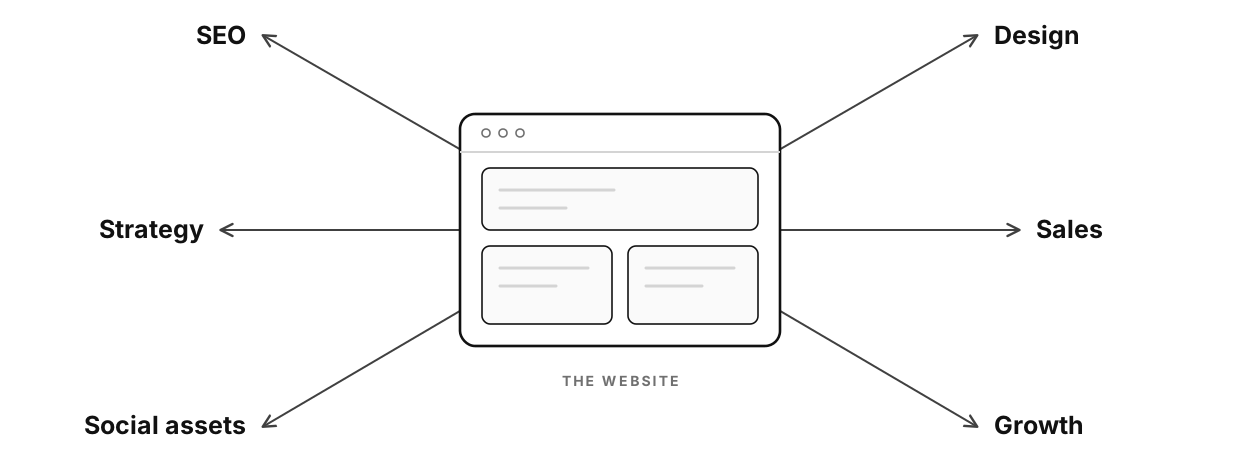
Most companies build a website to be looked at. I build it to be run from.
A brochure points at the business from the outside. You build it once, hand it to marketing, and move on. Then the business keeps moving and the site doesn't. Inside a year it describes a company that no longer exists. It didn't break. It stopped, because everything that actually runs the business went on living somewhere else. In a few heads. In a doc nobody opens.
When the site holds the real thing, what you offer, how you decide who it's for, how the work gets done, what's true right now, sales points to it instead of re-explaining, new hires onboard off it instead of asking, the team aligns to one version instead of seven. One source of what's true, on the surface where everyone can see it.

A site that goes stale is a business whose operating logic never left people's heads.
The reason most websites stop working isn't design or copy. The operating logic was never transferred. The site captured a moment, the moment passed, and the knowledge it was built from stayed with the people who built it. Keep it current by hand and you're back at the bottleneck: every change routed through the few people who hold the real picture.
A site that keeps working is downstream of a business whose operating layer runs without them. You can't get the first without the second.
That's why this is operations work, not web work.
Software automates the jobs. I'd start underneath them.
The market just filled up with software that promises to run your website for you: pages that write themselves, SEO and AI search tuned every week, conversion handled, the whole stack in one tab. The jobs are real. I'd do every one of them. But here's where I'd start, and it isn't the tool.
A website does all of that well for one reason: the business's operating logic is actually in it. What you offer, who it's for, how the work gets done, what's true right now. Get that onto the surface and the pages, the rankings, the answers AI gives about you mostly take care of themselves: there's something real to point at. Skip it and you've automated a brochure: faster, prettier, still describing a company that already moved on.
So I wouldn't start from a template or a platform. I'd start from how your business runs, and build the site as the layer it runs from:
- From your operating logic, not a theme. The site holds the real thing, so it stays true as the business moves.
- Found by machines because the substance is there. Search and AI engines quote you because the content is real and structured, not because a plugin bolted on schema.
- A surface you build on. Componentized enough to spin up pages and variations fast, not a static page you repaint once a year.
- Yours, running without me. I move the operating layer out of a few heads and hand it back. It keeps working because the business behind it does, not because a subscription is still running.
That's the difference between buying software to drive and having the thing built right and handed to you. A platform is fine when you just need pages up.
When the site has to carry how the business actually runs, that's the work.
I've built this surface before.
- SEAM: digitized the standard itself and stood up the site as the working business, not a description of one.
- DRVN Golf: turned a founder's method into the platform other coaches run on: certification, curriculum, partner network, one surface.
- IWBI: turned a 400-page standard into a self-service platform serving 300,000 users in 131 countries.
Take what lived in a few heads. Put it where the work can run.
See whether yours can carry it.
The Operating Map is where this starts. Three sessions, three weeks, a memo on how your business actually runs, and whether the operating layer is transferable enough to live on a surface at all.
Book the Operating Map →